Wednesday, May 07, 2008

Hospital pharmacist Part 2

Besides being ward pharmacist, there are a few other roles a hospital pharmacist play.

image

First there are the dispensing pharmacists. These pharmacists deal with dispensing or giving out the medications to patients that are going to be discharged home. It is not an easy job, as giving the wrong medication may result in life threatening situations. The pharmacist had to do few checks along the way to ensure that the right patient take the right medication in the right dose at the right time on the day in the right way.

image

Then there are manufacturing pharmacists. These pharmacists are specially trained to be able to make creams, ointments, injectable solutions and other drug formulations that cannot be brought in pre-packed for patients. They work in sterile rooms with masks, gloves and protective clothings, just like a surgeon.

image

There are pharmacists working in drug information, where their job is to look up uncommon information about medications when asked by doctors, nurses, the general public and also other pharmacists. They are just like detective scouring the WWW and pouring over books to find the elusive info.

image

There are those working in quality use of medicines, where they monitor how medicines are used in patients and what are the outcomes of patients on certain medications. They also look after adverse drug reactions, noting down and investigating cases where patients reacted badly to a certain drug.

image

Some work in clinical trials, where their job is to help with medical researches by ensuring candidates on the experimental trials got the designated drugs and use them correctly. Some other are involved in the research arena themselves, joining forces with other healthcare professionals to find out ways to improve the medical system, usage of medications and also discovering new drugs.

image

Besides this, there are hospital pharmacists who are involved in budgeting and other paperwork. Others are involved in teaching trainees and fellow healthcare professionals, some going to patients' home reviewing their medications, some even specializes in unorthodox field such as wound treating.

image 

In a nutshell, there are a lot of exciting roles a pharmacist can play in the hospital. It is not all just about standing behind the medicines counter and giving out the medications. That's only the tip of a great big iceberg. Essentially, hospital pharmacists are there to ensure that medications are used safety and efficaciously, so that patients receive maximal care.

Monday, May 05, 2008

A Sunday Story

One fine Sunday, a group of pharmacy students decided they wanted to drink the best milkshake in the world.

IMG_0737

So they went and visited the groovy Mr. Cow.

IMG_0727

Mrs. Cow to be exact, who kindly agreed to donate some milk.

IMG_0689

Since there were too much milk left after making the milkshake, the rest were donated the greedy black cow of the family.

IMG_0698

Whereby a cute rabbit suddenly popped up to be cuddled and then ran away.

IMG_0716

The inquisitive students chased after the rabbit and like Alice in Wonderland, fell into a rabbit hole - and found themselves in a world circa 1800s.

IMG_0751

Port Echuca. That's what the place called. The team walked through the main street,

IMG_0757

climbed on a wheelbarrow,

IMG_0821

and spotted a steamer boat.

IMG_0809

Hastily they scrambled upon the boat, where yours truly captained it.

IMG_0798

We steamed through the scenic Murray River, in a place caught between two worlds: Victoria on the right and New South Wales on the left.

IMG_0771

Then suddenly a row of riverbank shops came into view

IMG_0788

And we saw a familiar sight:

IMG_0787

Home Sweet Home!

Friday, May 02, 2008

The art of elocution

IMG_0592

The notion of standing in front of a group of people delivering a speech is an exercise of self consciousness, a training of how you would react with numerous pairs of eyes watching you intently,  expecting you to deliver. Indeed, when giving a speech, you are the centre of attention, and you can either be the eye of the storm or the epicentre of the earthquake.

Public speaking had often being the number one fear of most people. It is something we only do when we are forced to do. But like most phobias and fears, it is something that one can grow out of.

Public speaking was also once one of my greatest fears.  I suspect it all stemmed from an incidence in Primary 3 where I managed not to utter a single word while on stage in a singing competition. From that day onwards till I was in Form 4, I never spoke on stage.

When I finally did it, it was with the maxim that the best way to do a presentation is to memorise every single word: each noun, verb, adjective and pronoun to the last full stop. I still remember the time in INTEC when I rehearsed a presentation more then 30 times before doing the actual thing.

One thing good about pharmacy I can say, it that they really trained you to speak in public. After delivering a fair share of presentations, I began to relax a little and found that the trick to do that is to treat the presentation as a fun thing to do. Now, public speaking is just more of knowing the main points and words will flow.

The aim of a speech is to get the message through and an added bonus is for people to remember the message afterwards. I felt that no matter how good you are, if you can't give an interesting speech, the majority wouldn't want to hear what you say. Hence I always sought to be creative and make my presentation stand out.

In a class announcement, I tried to incorporate fun into my 2-3 minute spiel. One time I started with a slide with only some random numbers and alphabets on it, which actually stands for the first letter of every word I am going to say. I think it was an effective attention grabber and also let the audience have a little bit of fun. 

One of the thing I dreaded most about presentations is the Q&A session. But I realised that in a presentation, you are the one who control everything, not the listeners. In a recent presentation, I turned the table and asked the listeners a question before they can ask me. It is a twist that surprised people.

Another technique I found very useful is anchoring. It is a NLP technique where you visualise past moments when you are at the height of your confidence and transform them into physical manifestation which you can tap into anytime you need a dose of confidence.

Nevertheless, I felt that the best way to ace it is by taking that tried and trusted path - speak about your own experience. This is because it is the thing you know best.  Inject some personal anecdote into your speech and it will be hard to go wrong from there.

I never profess to be a great speaker, and don't think I am one, even though I wish to be one.  I still feel nervous, my hands do tremor and shake all the time, but  I am actually very  excited and loved the adrenaline rush when I have a chance to speak. The aim of this post is just to spill my two cents' worth about something I really care about - an essential life skill that shouldn't be as frightening as it seems. Public speaking is actually not that frightful at all, and some jitters is perfectly alright. The simple concept is that by not viewing it as a huge hurdle, it will cease to be one.

Monday, April 28, 2008

Drug jokes

Studying about drugs can be so boring and tedious sometimes.

Here's some jokes about drugs made up by yours sincerely:

Q: What drugs have the happiest families?
A: Beta-blockers! Because they end every word by LOL (laughing out loud) =D
PropanoLOL, pindoLOL, atenoLOL, metoproLOL, bisoproLOL, sotaLOL etc etc..

Q: Why does taking lisinopril or prerindopril make you do badly at Black Jack?
A: Because they are the ACE (angiotensin converting enzyme) inhibitors!


Know it's lame, but just have to take time out from studying.

By the way, both classes of drugs mention above are very effective in reducing blood pressure and can prevent the heart from working too hard.

Sunday, April 27, 2008

Pink for a cause

 imageimage image

I changed the background of my blog pink last year as a show of support for breast cancer research. Initially I wanted to change it to another colour after one month, but a combination of "dunno-how-to-do-it", "laziness" and "kinda like the colour" destined that it remains pink till now.

Anyway, I have no intention on changing in because its the time of the year again where I run for another 8km in the Mothers Day Classic run for breast cancer research. Thanks Dad for sponsoring the RM67.50 registration fee and Members Equity Bank for agreeing to donate 1 Aussie cent for every 2 steps I run. I will finish the course in as many steps as possible. =)

Too bad I had not much time to practice for the run on 11 May, because I'm going for another 3-weeks placement tomorrow - meaning another fifteen 9.00-530 days. This time it will be at a community pharmacy. And I had just hand in 3 assignments and have a debate in the past week. 4th Year is definitely a killer.

The Tablet-men and Pill-ladies in hospitals

image

Pharmacists in hospital are just like the producers and scriptwriters of a brilliant movie. They are involved in so many things behind the scene that normal people didn't get to see. All the public saw are the main actors and actresses, or in the hospital sense, those people in spotless white coats and stethoscope slung lazily around their neck. Hence the importance of pharmacists in the hospital setup are often overlooked and minimised.

image

Get out of the pharmacy, Dr House!

What are the roles of pharmacists in hospital?

Part 1: The ward pharmacist

Ward pharmacist as the name suggests, are the pharmacists that work on a specific ward. In Australia, a ward usually has 24-36 beds, and a pharmacist will be responsible for the medication side of things in that particular ward.

In the morning, the pharmacist will check the bed list: to see if there are any new patients and whether a patient will be discharged or moved to another ward (or died).

Then it is the ward round where the pharmacist will go round the beds checking the drug charts of the patients, making sure that the medications are given and see if there are any changes made by the doctor. If there are changes, the pharmacist will make sure it is suitable and then supply the meds.

Sometimes, a pharmacist will go on ward rounds and meetings with doctors, where they will contribute and discuss about the best care that can be given to the patient, especially in terms of recommending medications. Pharmacists also make sure that medication prescribed by doctors are safe and effective in a particular patient.

image

If there is a new patient, the pharmacist will do a history taking interview. It basically involves asking the patient or the patient's carer what medications they are taking before they came to hospital. The pharmacist will then make sure that these medications will not interact with those newly prescribed by the doctor, and will also supply those meds to the patient so that they can have a continuity of care.
If a patient is going to be discharged, a pharmacist will need to counsel the patient on the new medications added and some of the changes that are made to the medications that they are taking before hospitalisation. They will also liaise with the patient's usual community pharmacy so that they are aware of the changes in medication too.

image

A ward pharmacist needs to monitor a lot of things too. There are a lot of medications of which their levels in the body need to be monitored. This is to make sure that too little or too much of those medications are not given. Pharmacists usually advices nurses on the time to measure the levels and later read the results to make sure that the they are within range.

In Australia, hospital pharmacists are involved in many other aspects of patient's care. The other roles will be further explained in another post.
Sunday, April 20, 2008

Hospital Placement

When the placement first started it was groans and sighs about early mornings and long days. Towards the end its all too short and the end came too quick.

Yet another one of those little paradoxes of life.

P1010185

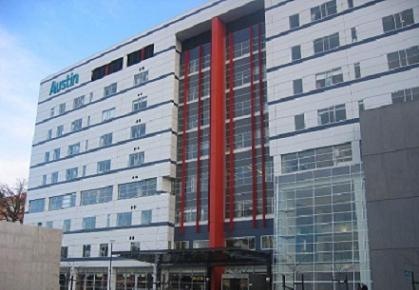
Me at the entrance of the main Austin Hospital.

My 3-weeks placement in Austin Hospital was educational if I am to summarize it in one concise word. It was the most intense 3 weeks where I got to really scrutinise and conceptualise all my medications knowledge gained over the past 3 years in Uni and deploy them in the real world.

Knowing things for exams is different from knowing things in the real setting. You have to literally think on your feet, trying to answer questions on the spot when asked by some pharmacists or even worse, doctors. I was on a ward round once - where the consultant, junior doctors, interns, nurse, pharmacist and a hoard of students from various disciples visit patients one by one. I was trying to look competent, scribing some doodles on my notebook when the consultant asked me a question out of the blue. Try having to think when a few pairs of eyes are boring into you expecting an answer. The pressure was tremendous. 

P1010179

The repatriation hospital where I spent one week of my placement.

I spent my time in 3 different wards: renal, geriatric and orthopaedics. I got to follow 3 pharmacists with different styles of teaching, but nevertheless managed to derive substantial amount of knowledge and experience from them. There are also various tutorials where I got to make capsules and dispense medicines and do info search, as well as actually counselling and interviewing patients.

I got a taste of what hospital pharmacists do and found out that hospital is not as dull a place as what I initially perceived. They are all sorts of different patients with weird diseases and combinations of medications. I got to analyse the medications they are taking and it is always exciting when you find out that there is something wrong with the medications.

IMG_1158

Me with other pharmacist wannabes at the hospital .

It was indeed an exciting and memorable experience. I felt like a real pharmacist for the very first time. Hopefully being a hospital pharmacist in Malaysia is as interesting and rewarding as a hospital pharmacist here.
Tuesday, April 15, 2008

Interesting

Facebook is filled with a lot of quirky and interesting groups, lots of them set up for no apparent reason other then just to have some fun.

Just stumbled upon a very interesting group called:

Top 10 Reasons For Dating A Pharmacist.

image

And the reasons are..

1. Very clean life style and bed style too.
2. We are well trained to listen.
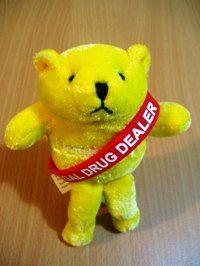
3. Drug Dealers….with a license! Hell yea..
4. Free drugs, condoms, and birth control pills…We play safe!
5. When it comes to measures we are precise, gentle, and got a whole bunch of leaks before reaching the end point! lol,don’t u just love Titration?!
6. We know quite enough anatomy, to know what works and where.
7. We own a variety of lotions, creams and gels, and aren't afraid to use them.

8. We do it on the counter, in the car, and on hospital beds all day long.
9. We never miss a target ;)
10. Love is all about chemistry, right?…Well so is Pharmacy!

Funny and creative =).

Rose tinted glasses

image

This is a favourite story that I always try to reflect upon when I realise that I started to judge people from my point of view, which is often.

This passage is lifted from Stephen Covey's 7 Habits of Highly Effective People.

I remember a mini-paradigm shift I experienced one Sunday morning on a subway in New York. People were sitting quietly — some reading newspapers, some lost in thought, some resting with their eyes closed. It was a calm, peaceful scene.

Then suddenly, a man and his children entered the subway car. The children were so loud and rambunctious that instantly the whole climate changed.

The man sat down next to me and closed his eyes, apparently oblivious to the situation. The children were yelling back and forth, throwing things, even grabbing people’s papers. It was very disturbing. And yet, the man sitting next to me did nothing.

It was difficult not to feel irritated. I could not believe that he could be so insensitive as to let his children run wild like that and do nothing about it, taking no responsibility at all. It was easy to see that everyone else on the subway felt irritated, too. So finally, with what I felt was unusual patience and restraint, I turned to him and said, “Sir, your children are really disturbing a lot of people. I wonder if you couldn’t control them a little more?”

The man lifted his gaze as if to come to a consciousness of the situation for the first time and said softly, “Oh, you’re right. I guess I should do something about it. We just came from the hospital where their mother died about an hour ago. I don’t know what to think, and I guess they don’t know how to handle it either.”

Can you imagine what I felt at that moment? My paradigm shifted. Suddenly I saw things differently, and because I saw differently, I thought differently, I felt differently, I behaved differently. My irritation vanished. I didn’t have to worry about controlling my attitude or my behavior; my heart was filled with the man’s pain. Feelings of sympathy and compassion flowed freely. “Your wife just died? Oh, I’m so sorry! Can you tell me about it? What can I do to help?” Everything changed in an instant. 

I really hoped that there're more people out there who really reflect on the meaning of paradigm shift or anjakan paradigma rather than just using them verbatim in Form 5 to make their BM essay sounds more sofisikated. Try see the direction from where the others are coming, rather then impose what you think upon their action or opinions.

Sunday, April 13, 2008

It's not all about the money

image 

"With the pay they are getting there, it’s highly unlikely they will come back and serve here." 1

This is what the Public Services Department (PSD) or more affectionately known as JPA sees as the main reason why overseas scholarship holders are not keen to come back to Malaysia after finishing their tax-payers funded degree. Admittedly that's what the general public in Malaysia perceived also.

"Selfish ungrateful scoundrel! Use our taxpayers money to study overseas and then stay back to earn more money!"

I have no sympathy for them, because I always felt that if they are given a chance, they will do exactly that too.

image

As a PSD scholarship holder, I admit that the amount of money earned overseas is a big plus factor to stay put, but I never saw it as the number one reason for students to break bond. Money is not everything for the most of us.

What I saw as the main factor is the uncertainties about our future in Malaysia that make us reconsider our options of going home.

Throughout our studies here, PSD never inform us what we do not know what to expect when we get home. Whenever the officer came to see us, the highlight is always the delicious Nasi Briyani at the end of meeting. The rest is predictable. No, according to the rule, you cannot stay back. No, not even for further studies. What to do when you go back? Or just go to Putrajaya, they will sort it out.

image

It seems that their job is only to get us overseas to study and make sure we get back, and they are not even good at that.

"Another reason many students chose to stay back could have been due to PSD’s perceived lenient treatment of such students in the past." 1

Admittedly, that's a hell of a good reason. But we here prefer to call it ineffectiveness, not leniency.

PSD never bothers to tell us what our options are when we go back to Malaysia. They never bother to get us in touch with our destined profession back home in Malaysia, never told us about where we are likely to work, how the working condition is like, the salary and perks, the chances for further studies or promotion. There's a sense of detachment, a sense of uncertainty.

In contrast, we know what to expect when we start working in the country we graduate in. The options are clear and we are familiar with their laws and systems. And since I had carve out a road for myself here that is likely to secure my future, why should I let it all for for uncertainty? The only reason I can see is for the abstract and ungraspable concept called honour and patriotism.

image

Back to the point, I'm sure that if they spend more time giving us the information and reassure us about our future when we return to Malaysia, the chances of us going back is far higher. A sense of security is a basic human need, and if you can't supply them, don't start blaming those students.

And don't you start complaining that as we are top students, we should be resourceful and find out the opportunities by our own means. I know we know better than being spoon-fed but we really want to hear from the horse mouth. We want the reassurance and feel the sincerity. That's not too much to hope for in the view that we are going to sacrifice the bulk of our life working for the government when everyone knew that the money is greener outside.

image

So when we finish our course, we are staring into 2 different paths, one with the end as clear as day, the other shrouded with dense foliage and mist. It's a hard choice, and being realists, we are certainly not to do a Robert Frost and go for the road not taken.

Thursday, April 10, 2008

Eclipsing the rest

There is now a generation known as the "tweenagers" - kids between 7 to 11 who have mums and dad loaded with money and hence huge purchasing power. But I think the term is more suitable for people in their early twenties who are still a teenager at heart: TWENties-AGERS.

Its hard being in that early twenties age group: definately the most difficult period of one's life. Its the time when you are caught between two worlds, wanting to be related to the "INess" of the younger world and the "Sophistication-ess" of the matured world.

To be savvy nowadays, you need to have some fancy stuffs. Not too glaring and garish mind you, or you will look like a desperate attention grabber. Something subdue and stylish will do.

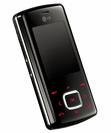
You definately need to have a good handphone:

image

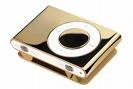
An Ipod. Be it Nano or whatever (I want one and May is near..)

image

Somewhat interesting watch that is not too old looking (think gold watch) or young looking (digital watch).

IMG047

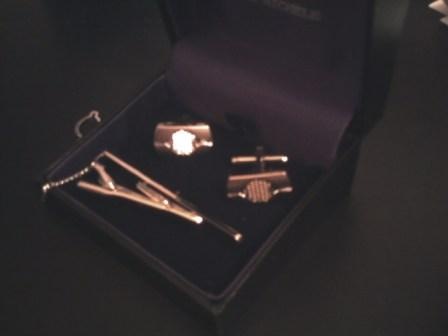
And perhaps tie pins and cufflinks that make you look more polished and matured.

IMG048

Unfortunately, you will soon find out that these things are often too expensive.

But fear not, there is a new fashion accessory that is cheap and affordable (and tasty too!)


DRUM ROLL.....


ROLL...


ROLL..


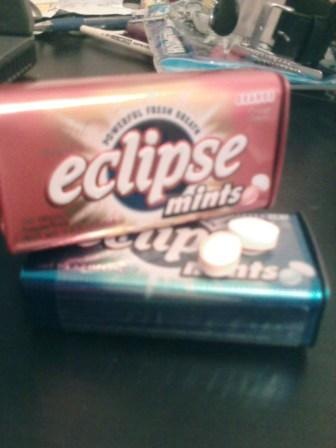
It's the Eclipse mint!

IMG045

Nearly every Tweenagers have them. Available in four flavours in Australia, the 50 mints are encased in a shiny metallic packaging that oozes class and sophistication.

image

You can push it up with you thumb with a fluid flick - a move that if practiced perfectly can be as stylish as lighting up a lighter.

IMG046

They are so damn popular that they got their own Wikipedia page.

Best of all - the mints gives you fresh breaths and a cool soothing feeling in your mouth. And best of best of all - it only cost slightly more than $2 dollars (depending on where you get them). Compare that with the price of a handphone!

image imageimage

So if you are twenty-ish and wants to look cool and fit in with the crowd, look no further away then the checkout counter of your local friendly supermarket.

Ah..Eclipse mint.. if only I am paid to write this.

Sunday, April 06, 2008

Med Happy Pharmacists

image

Last week the jumping-the-gun journo in NST reported that Doctors in Malaysia are not going to be able to dispense medication soon. The job will go to the pharmacist.

Just as I was happily dreaming about $$$, the next day the Minister from the Cursed Ministry reported that they are just starting a study on that. Doctors are still medical gods. So nada. Pharmacists in Malaysia back to counting pills and selling vitamins.

The general population in Malaysia most probably wouldn't care a cent about who will dispense their medication to them. Perhaps they even prefer the docs did it - because it is so ever convenient. Just visit the doc, wait 5 minutes after consultation, and the pretty lady in the counter will give you the meds.

Take the white one 3 times per day. Blue one 2 times per day. OK? Yes nurse. Yes doctor. Who cares what is it for and how it works? Who cares what are the side effects and risks?

Personally, I don't think that pharmacists in Malaysia is really to dispense medicines and the general public is not ready to accept them.

Why? Main reason is that Malaysians certainly do not have enough awareness of the importance of understanding their meds. I was one of them when I am still studying in Malaysia. Never cared how the meds work. Never cared what will happen if forgot to take a dose. Never cared about anything except just docilely do what the doctor asked as good as possible.

After three years studying here, it was glaringly evident that Australians are miles ahead in terms of understanding their medications and their meds. Not to generalise but they ask questions. They are well read and aware of the happenings in the  medical world. There are a lot of published guidelines and websites and support groups for different diseases and sicknesses.

Besides, in Malaysia, only doctors are deemed to have the credibility to issue meds. Doctors are the top profession there and nearly every mums and dads wanted their children to be doctors. They are respected and venerated. Who want to hear advice from a pharmacist? Pharmacists haven't command great respect from the Malaysian population yet compared to Australia. They are still known as shopkeepers who happened to sell meds. Without the respect, it wouldn't work.

Australia is a country where pharmacists dispense medicines. There act as a safety net for the patient - making sure that the medications are correct and explaining to the patient what the medications are for and what things to look out for. They are also often the first point of call when a patient is feeling sick, especially in the rural areas. They give medical advice, give meds for simple maladies and can be the close confidante of a patient.

Furthermore, there exist not a system to take care of how much a pharmacist should charge for their service, how much the government should reimburse them, how should the patient's pay etc. And then there's those people living in long houses. Will there be flying pharmacists too? These systems are not built in one day. Besides, since everyone (except the pharmacists) are quite comfortable with the current arrangement, who wants a change? It takes courage to change.

Even though I personally wished that Malaysia can have a system like Australia's, I really can't see that happening in these 10 years. However, what I can do is just to increase the awareness about the potential of pharmacies and pharmacists and hopefully start the stone rolling to eventually create the system.

Pharmacy series

image

Starting from today, I will be starting a new series on Pharmacy. Now into my final year of studies, I felt that it is morally responsible to share what I knew and learnt about the profession.

Pharmacy is an area that is shrouded with misconception. They are viewed as pill counters, vitamin sellers, medicine dispensers in hospital and many can't fathom why we need to go through a four-year course.

In this series, I will share about what we really learn in University, what are the real roles of pharmacists and also some on my viewpoints on the future bearings of the profession. I will also strive to increase awareness on medications and their proper usage.

Hopefully this series will be very enlightening and entertaining to you all. First post will be out sometime tonight.

IMG_2909

Hospital Placement

arm_main

Monday, Tuesday, Wednesday, Thursday and Friday.

6.40a.m. Alarm Rang. 6.45a.m. Woke Up. 6.50a.m. Dress Up. 7.10a.m. Breakfast 7.22a.m. Brisk walk to tram stop. 270 metres. 7.28a.m. On tram. 7.32a.m. Reached Parliament Train Station. Rushed down 3 flights of stairs and 2 long escalators. 7.36a.m. Train to Flinders. 7.38a.m. Reached Flinders. Change Platform. 7.39a.m. Read notes or buy coffee. 7.51a.m. Train to Hurstbridge. 8.15a.m Reach Heidelberg. 8.25a.m. Reach Pharmacy Department of Austin. 8.30a.m. Day start.

This week I began my hospital placement at Austin. As illustrated above, it is very far and quite a hassle to get there. I discovered that I have misstramphobia and tramlatephobia - causing me to constantly consult the fingers on my watch and walk the businessman stride. Missing a tram or train will have a domino effect - you miss one, you will miss another and another, hence late as a result.

My hours at Austin are 8.30a.m. to 5.30p.m. We have a few tutorials, and spend the rest of the time in wards. For the first week, I was assigned to the Renal department. I shadowed the ward pharmacist, observing what she did and did the things she asked me to do. It never ceased to amaze me how clever she is - constantly remembering all the doses and side effects and counselling points of the medications. Just like a human dictionary. Can't believe I am supposed to be able to do that next year.

The most important thing I learnt last week was perhaps that never ever get sick and got admitted to the hospital during the weekend. This is because a lot of the usual staffs only work Mon-Fri, and weekend people are those unfortunate enough to have duty that week.. So you will get someone who doesn't know anything about you looking after you..which is scary..

Anyway, it was very tiring. Reached home at 7.00p.m. everyday, cook and eat dinner and watch TV and take bath till 10.30pm.,  and slept at 12.00a.m. Really no time to do anything else. By the end of Friday just felt like having to pamper myself.

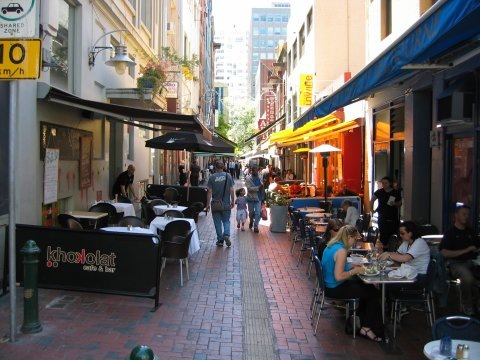
So went out to eat with my good friend in 3rd Yr to catch up what's been happening in Uni after finishing the day. After walking aimlessly for 15 mins spotted this charming little street called  Hardware Lane. The ambience is very nice, with live music on the sidewalk. We had a two-course meal - I had prawn salad and scotch fillet and we share a bottle of red wine. Delicious.

hardwarelane

Recharging my batteries this weekend. Monday is so near again...